
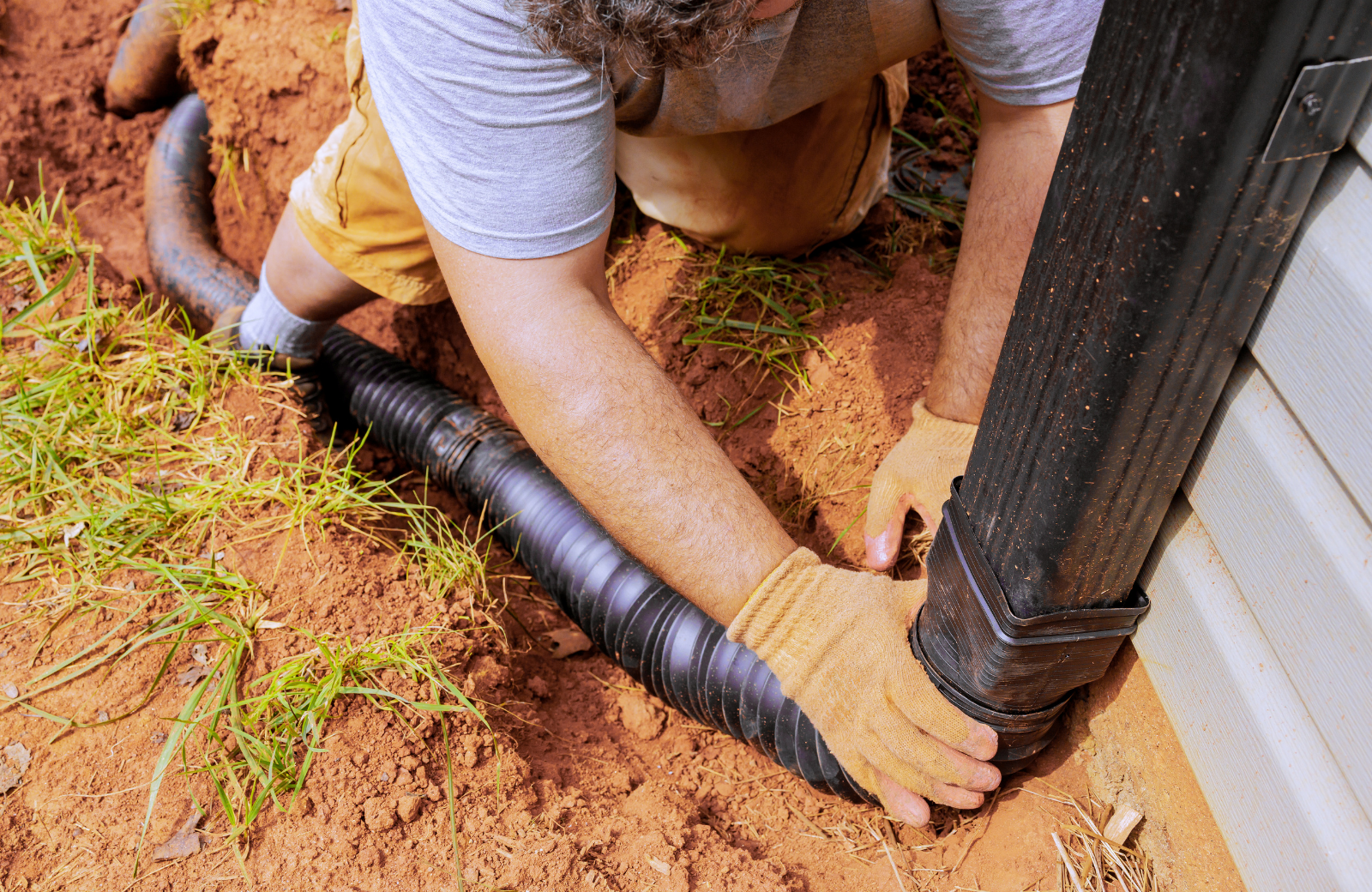
Good downspout drainage moves roof water at least six to ten feet away from your foundation and releases it somewhere the ground can absorb it. If your downspout ends in a splash block two feet from the house, that is the source of most of your yard problems.
Roof water is the largest single volume of water your property handles. One storm sends hundreds of gallons through a few small openings.
Everything downhill of those openings pays the price. Soggy turf, mulch washing across the walk, and a wet crawl space all trace back to the same place.
Do This Today
- Walk outside during the next rain and watch where each downspout actually dumps.
- Measure the distance from each outlet to your foundation wall.
- Look for mulch trails, gullies, or bare soil fanning out below an outlet.
- Check whether any buried lines still flow or have quietly clogged.
- Note any spot that stays soft more than a day after the rain stops.
What Downspout Drainage Really Does For Your Property
Gutters are only half a system. They collect water, and downspout drainage decides where that water goes next.
The Actual Job Of A Downspout
A downspout concentrates the water from a whole section of roof into one pipe. That concentration is the point, and it is also the risk.
Rain that would have fallen evenly across 800 square feet now exits at one spot. Soil that handles a normal rain fine cannot absorb that volume in one place.
How Much Water Is Actually Coming Off Your Roof
Homeowners consistently underestimate this. Gutters and downspouts in North Carolina are sized for a serious storm, not a drizzle.
NC State Extension publishes the design tables our region uses. In Raleigh, a three inch downspout is rated to drain up to 2,770 square feet of roof.
A two inch downspout handles roughly 908 square feet. Those tables are built around a 100 year, one hour storm event.
Read that a second time. A single downspout may be carrying the runoff from a third of your house.
Signs Your Downspout Drainage Is Failing
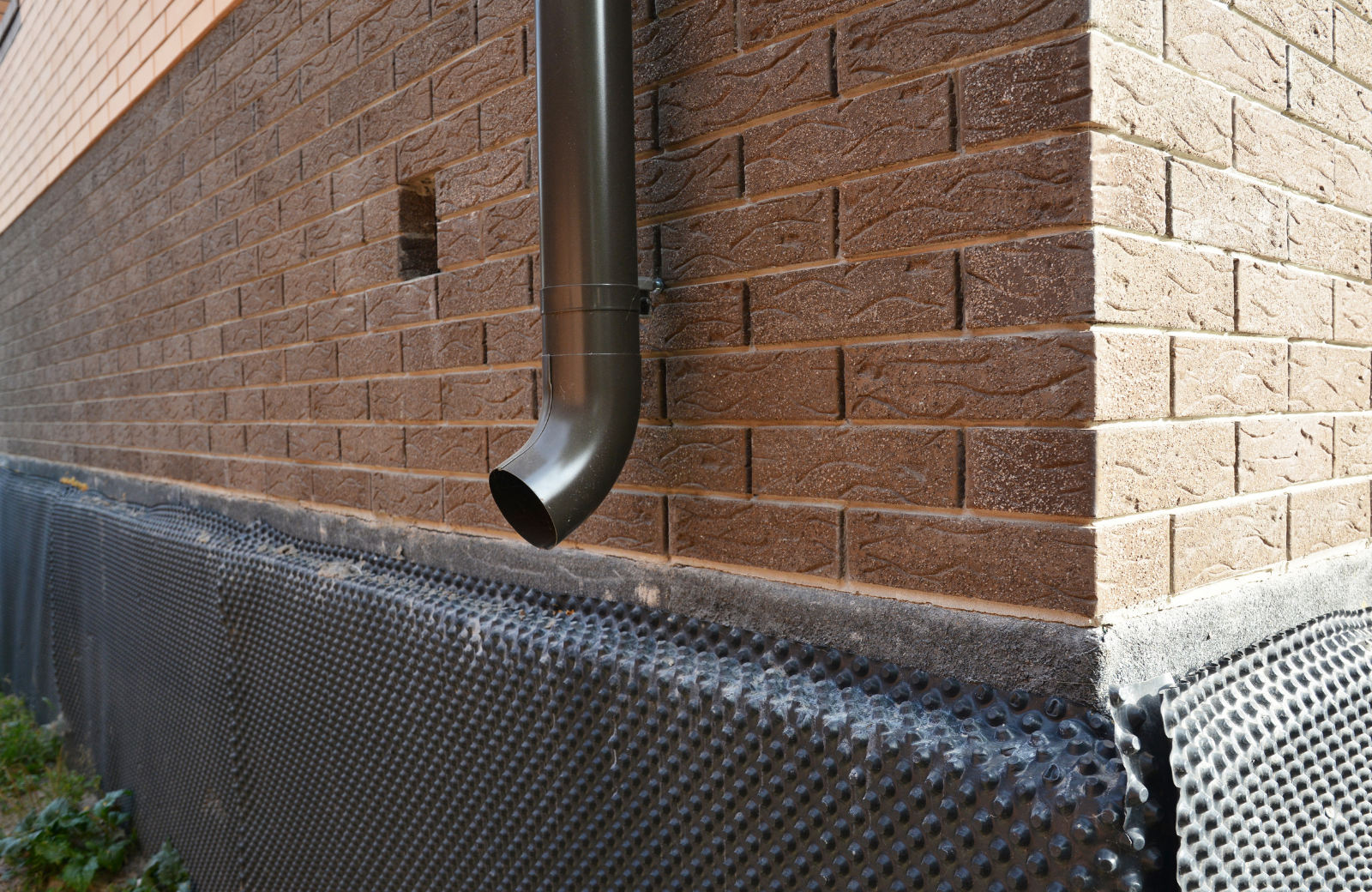
- Mulch or gravel washed out into the lawn after every storm.
- A trench or gully forming below one outlet.
- Turf that stays soggy in the same spot for days.
- Water stains, efflorescence, or dampness on foundation walls.
- Water backing up and spilling over the gutter at one corner.
- Settling or cracking in a walkway near a downspout.
- Mosquitoes breeding in a low area that never dries out.
Any one of these is worth a look. Two or more usually means the water has been going the wrong way for years.
The Downspout Drainage Mistakes We Find Most Often
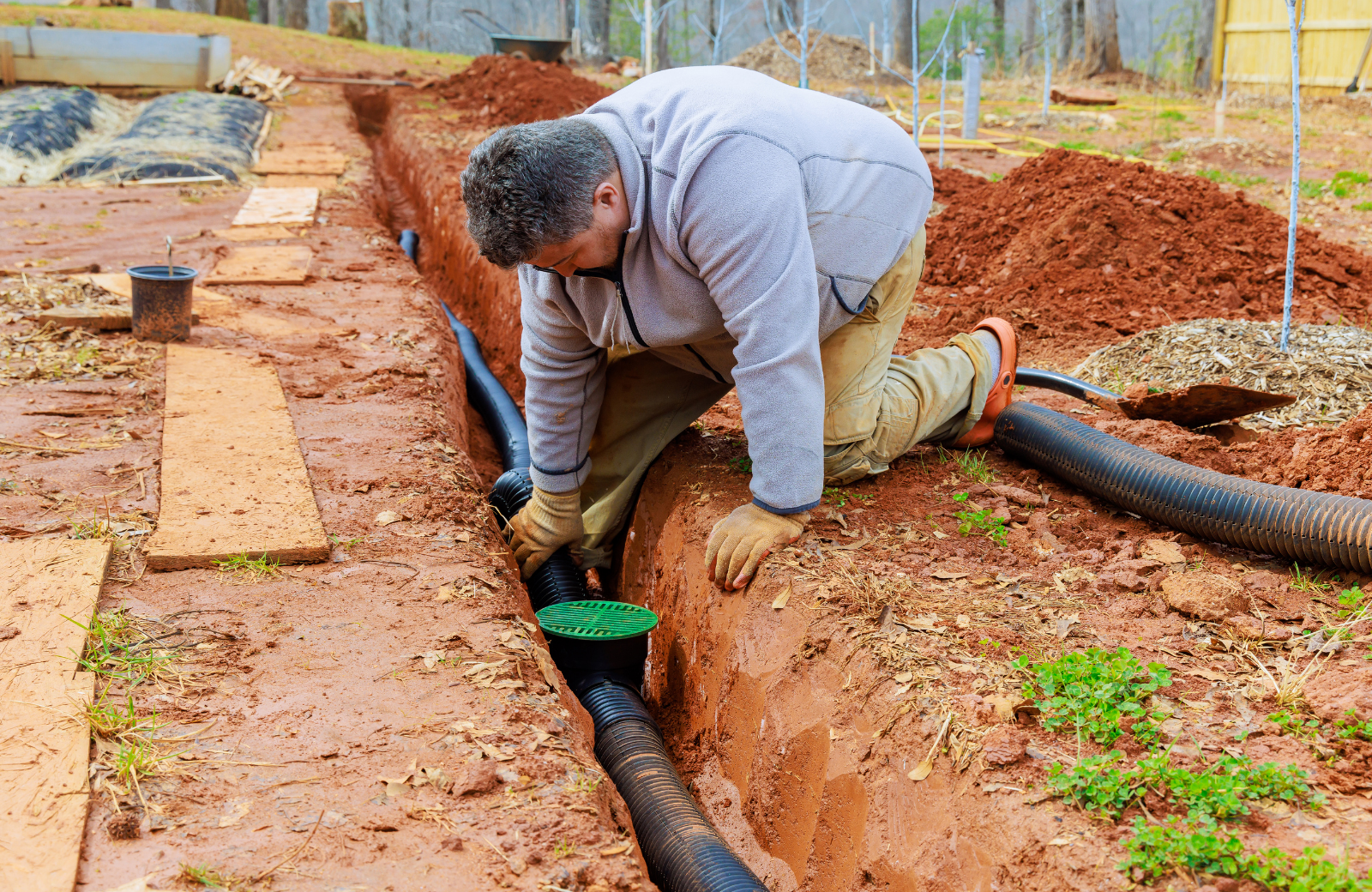
We walk yards across Johnston County every week. The same handful of problems account for most of the calls.
Dumping Water Right At The Foundation
A splash block sitting a foot from the wall does almost nothing. The water lands, spreads, and soaks straight down along the footing.
Over years that saturates the backfill soil around your foundation. Damp crawl spaces and settling slabs often start here.
Draining Onto The Driveway Or Into The Street
The EPA notes in its Soak Up the Rain program that downspouts are often directed onto a paved surface, such as a driveway, which sends water directly into the street. It sounds tidy and it costs you twice.
Your soil gets none of the water, and the runoff carries fertilizer and sediment into the storm drain. Redirecting that flow into a planted area lets it soak in instead.
Buried Lines Nobody Has Touched In Ten Years
Underground drain lines are the best solution and the most neglected one. Leaves, shingle grit, and silt build up inside them season after season.
A clogged line does not announce itself. It quietly backs up until water surfaces at the downspout instead.
If you have buried lines and no idea whether they still flow, a camera inspection answers that in minutes. Guessing usually costs more than checking.
Corrugated Pipe Where Solid Pipe Belongs
Flexible corrugated pipe is cheap and easy to lay. The ribbed interior also traps sediment and slows flow.
Solid smooth wall pipe carries more water and flushes itself. For a run of any length, it is the better choice by a wide margin.
Fighting The Grade Instead Of Working With It
Water only travels downhill. If the ground slopes back toward your house, no amount of pipe fixes that on its own.
Plenty of yards need the grade corrected before the drainage plan makes sense. That is why our yard grading work and our drainage work almost always get planned together.
Sending Everything To One Low Corner
Tying four downspouts into a single outlet concentrates the problem instead of solving it. That corner becomes the new swamp.
Splitting the flow across separate outlets spreads the load. It also gives you redundancy if one line clogs.
Your Downspout Drainage Options Compared
There is no single right answer. The right choice depends on your slope, your soil, and how much yard you have to work with.
| Option | How It Works | Best For | Watch Out For |
|---|---|---|---|
| Downspout extension | Adds four to eight feet of above ground pipe | Quick relief on a yard that already slopes away | Trip hazard, mowing obstacle, gets moved and forgotten |
| Buried solid pipe to daylight | Carries water underground to a lower spot that opens up | Lots with enough fall to reach a lower point | Needs real slope, outlet must stay clear of debris |
| Pop up emitter | Buried line ends in a spring loaded lid that opens under pressure | Flat lots with no place to daylight a pipe | Clogs if silt gets in, needs periodic checking |
| Dry well | Buried gravel or chamber holds water while it soaks in | Well draining soil away from the house | Poor performance in heavy clay, fills with silt over time |
| Rain garden or planted bed | Shallow planted basin absorbs and filters the flow | Yards with room and a homeowner who wants curb appeal | Needs correct sizing, plants must tolerate wet and dry |
| French drain | Perforated pipe in gravel collects water already in the soil | Groundwater and seepage problems | Not designed as a downspout outlet, clogs fast if fed roof debris |
| Regrading the yard | Reshapes the surface so water flows away by gravity | Any lot where the ground pitches toward the house | Larger project, but it fixes the cause rather than the symptom |
Why French Drains Are Often The Wrong Tool
Homeowners ask for a French drain more than any other solution. Most of the time they need something else.
A French drain is built to collect water already saturating the soil. Piping a downspout straight into one packs it with shingle grit and leaves.
Roof water belongs in solid pipe. Groundwater belongs in perforated pipe. Mixing the two jobs shortens the life of both.
Where Pop Up Emitters Earn Their Keep
Flat lots in newer subdivisions often have nowhere to daylight a pipe. A pop up emitter solves that by opening under water pressure and closing after.
They do need attention. Silt and mulch work their way in, and a stuck lid backs the whole line up.
How To Plan Downspout Drainage That Actually Lasts
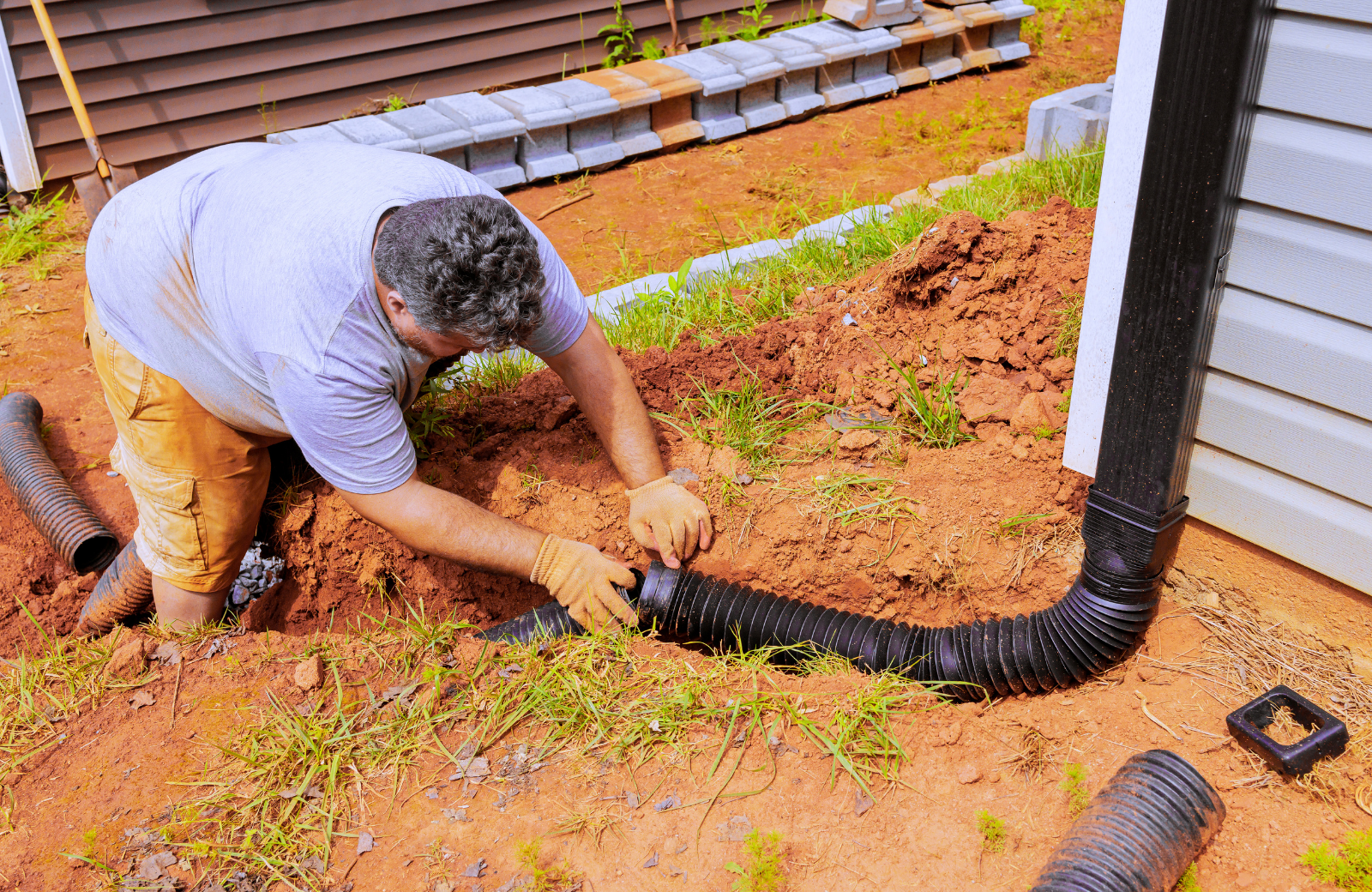
A good plan starts with the site, not the product. We look at the whole path the water takes before choosing any pipe.
Start With The Grade
Stand at each downspout and follow the ground with your eye. Where does the surface fall away, and where does it flatten out or turn back?
Common guidance is roughly six inches of fall in the first ten feet around a house. Many yards in our area have settled well past that.
Size And Slope The Pipe Correctly
Undersized pipe is a common shortcut. If a three inch downspout drains 2,770 square feet of roof, a narrow line will not keep up during the storms that matter.
Buried lines need continuous fall toward the outlet. Even a small belly in the pipe collects silt and eventually plugs it.
Give The Water Somewhere To Go
Every line needs a destination that can handle the volume. A pipe that ends in the middle of the lawn has only moved the puddle.
Good destinations include a lower point that daylights, a properly sized dry well, or a planted basin. Your neighbor’s yard is never one of them.
Keep It Maintained
| How Often | What To Check |
|---|---|
| Every storm, first year | Watch each outlet run and confirm water leaves the area |
| Spring and fall | Clear gutters and downspout screens of leaves and grit |
| Twice a year | Lift and rinse pop up emitters, clear the outlet mouths |
| Yearly | Walk the discharge points for erosion or settling |
| Every few years | Camera inspect buried lines or jet them clear |
| After any landscaping work | Confirm nobody buried or crushed an outlet |
Account For Piedmont Clay
Soil type changes what will work in your yard. Much of central North Carolina sits on heavy red clay.
Clay absorbs water slowly. A dry well that performs beautifully in sandy soil can sit full for days here.
That is why we test how fast water actually moves in your soil before recommending an infiltration solution. On dense clay, carrying the water somewhere else usually beats trying to soak it in.
Our full yard drainage solutions are built around what your ground will really do. A plan that ignores soil is a plan that fails in year two.
Commercial Properties And HOA Common Areas
The stakes rise with the size of the roof. A retail building or clubhouse concentrates far more water than a house does.
Failed downspout drainage on a commercial site shows up as washed out mulch beds and eroded entrances. It also creates slip hazards where water crosses a walkway.
Property managers usually want the same two things. Water that leaves the site cleanly, and grounds that look presentable to residents and customers all year.
Think About Winter Too
Freezing weather is short here, and it still matters. Ice at an outlet blocks the line just when a winter storm loads it up.
Outlets set slightly above the surrounding grade drain better and freeze less. Small design choices like that decide whether the system works when you need it.
Repair The Damage The Old Setup Caused
Once the water is going the right way, the yard can recover. Washed out beds get remulched and eroded areas get regraded.
Bare soil where water ran for years usually needs new turf. Sod gives you immediate cover on a slope that would wash seed away.
Frequently Asked Questions
How far from the house should downspout drainage discharge?
Six to ten feet away from the foundation is the common target, and further is better on flat lots. The distance matters less than the destination. Water released ten feet out onto ground that slopes back toward the house will still end up at your footing.
Is it safe to bury a downspout drain line?
Yes, and it is usually the cleanest long term answer. Use solid smooth wall pipe rather than flexible corrugated pipe, keep continuous fall toward the outlet, and give the line a real discharge point. Buried lines do need periodic cleaning, so plan for access.
Do pop up emitters actually work?
They work well on flat lots where there is no low point to daylight a pipe. The lid opens under water pressure and closes afterward, which keeps debris and animals out. They clog when silt enters the line, so check and rinse them a couple of times a year.
What size pipe do I need for downspout drainage?
Match or exceed the capacity of the downspout feeding it. NC State Extension design tables rate a three inch downspout in Raleigh for up to 2,770 square feet of roof, and a two inch downspout for about 908 square feet. A four inch solid line is a common minimum for buried runs.
Why does water still pool after I extended my downspouts?
Extensions only relocate the discharge point. If the yard has a low area or the grade pitches back toward the house, the water finds it anyway. That situation calls for regrading or a buried line with a real outlet.
Can downspout drainage cause foundation problems?
Poor downspout drainage is one of the most common contributors to foundation moisture. Repeatedly saturating the soil beside a footing leads to damp crawl spaces and uneven settling. Moving that water away is far cheaper than repairing the results.
Getting Your Roof Water Under Control
Downspout drainage is unglamorous work, and it protects more value than almost anything else in the yard. Fixing it once removes a problem you would otherwise fight every spring.
What We Handle For You
We start by watching where your water actually goes, not where it was supposed to go. Then we build a plan that matches your slope, soil, and layout.
That work includes buried solid pipe, pop up emitters, dry wells, and outlet points that stay clear. We also correct the grade when the ground itself is the problem.
Why Homeowners Here Call Us
We work in Clayton, Fuquay Varina, Holly Springs, Willow Spring, and the surrounding communities. We know the heavy clay soils in this area and how little they absorb during a summer downpour.
You get a plain explanation of what is happening and what it will take to fix. No jargon, and no upselling you into a French drain you do not need.
Let Us Take A Look
The best time to sort this out is before the next heavy season. Grading and drainage work go smoothest when the ground is not already saturated.
Call us at (919) 673 3956 for a free estimate and consultation. You can also request your free quote online, and we will come walk the property with you.
We move the water. You stop worrying about the rain.